
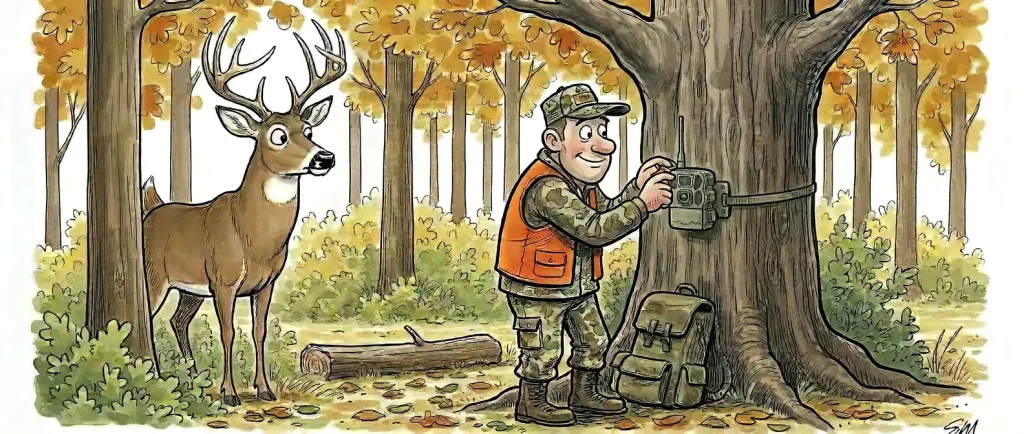
Hunting Whitetails Smarter Using Game Cameras
Using game cameras for whitetail deer hunting can make you a much better whitetail hunter, but only if you use them the right way. A camera should not just collect random deer pictures. It should help you understand where deer travel, when they move, which bucks are using the area, and how to hunt them without adding unnecessary pressure.
I have learned that the biggest mistake with game cameras for hunting is checking them too often or placing them where the access does more harm than good. Mature bucks do not tolerate much human intrusion. If I have to walk through bedding cover, cross major deer trails, or stink up a prime travel route just to pull a card, I may be hurting my hunt more than helping it.
The goal is simple: use cameras to gather useful information while keeping the area as natural and undisturbed as possible.
For more camera strategy ideas, Whitetail Habitat Solutions has a helpful breakdown of trail camera strategies, and Realtree offers practical advice on using trail cameras around cautious whitetails.
1. The Problem: Too Much Pressure From Game Cameras
Game cameras are supposed to do the scouting when I can’t be out there. But if I keep tromping in just to check the photos, all I’m doing is spooking the deer myself. Every visit leaves behind scent, noise, and some sort of disturbance. The camera itself rarely bothers deer, but they definitely key in on fresh boot tracks and human odor around their prime spots—especially old, wary bucks. If they realize someone’s snooping near their core area, they’ll change their patterns fast.
That’s why I always avoid “high-impact” spots for cameras. I’m not sneaking through thick bedding cover or crossing a well-used deer trail just to hang a camera. If the only way to get there puts me right in the heart of buck country, it’s the wrong spot.
Any time I’m about to put up a camera, I ask myself three things:
- Can I check this camera without tipping off deer?
- Will these photos answer a specific question I have?
- Will the info actually help me hunt better?
If I can’t say yes to all three, I’ll move on and find a better place to hang it.
2. The Opportunity: What Cameras Reveal
The real magic of game cameras is spotting patterns. You find out which deer move through, what times they show up, and how things shift week after week.
Some of my favorite spots to set them:
- Field edges
- Food plots
- Oak flats
- Creek crossings
- Fence gaps
- Scrapes
- Waterholes
- Travel corridors
- Access trails to stands
One photo doesn’t tell the full story, but a few dozen taken over days—or weeks—show you how deer use the area. For example, if a buck only hits a food plot after dark, I’m probably not sitting right over that food. Instead, I’ll pull back, look for the trails and funnels he takes between bedding and feeding, and figure out where he might slip through during daylight.
That’s when cameras really earn their keep. They don’t replace woodsmanship, but they make it more effective.
3. The Solution: Using Cameras On Purpose
Every camera I set has a job to do. I’m not just hanging them up “wherever.” I want each one to solve a scouting problem and give me real answers.
Location is key
In summer, I put cameras on food sources, mineral licks (where it’s legal), or along major field edges to see what bucks are around. As early season fades, I shift them closer to travel routes and those places where deer transition between bedding and feeding. Once the rut heats up, I move cameras to scrapes, funnels, corridors—anywhere a buck might cruise for does with his nose to the wind.
Access matters
I’ll only use a spot if I can check the camera with little impact, like from a field edge, a farm lane, or a path I already use to reach my stands. If I can, I time my checks with good conditions—maybe after a rain, on a windy or damp day, to help cover scent and noise. Most of the time, I only check cameras when I’m already walking in to hunt. No extra trips unless I have to.
Cell cameras help, for sure—they cut down on human disturbance, as long as you have signal and keep batteries fresh. Just remember, even those need thoughtful placement and some maintenance now and then.
Camera angle makes a difference
I never aim the camera straight across a skinny trail—deer move too quick for good shots. Instead, I angle the camera down the path, giving it a better chance to catch clear, useful photos. I don’t set them right on top of the trail, either. A little distance gives you better images and can help the deer ignore the camera altogether.
Before I leave, I make sure no grass, branches, or leaves are in front of the lens or sensor. Nothing worse than filling up a memory card with 1,000 shots of a waving bush.
Common Mistakes to Avoid
There are a few mistakes I see (and sometimes still make):
- Checking cameras too much. Curiosity ruins more good spots than anything else.
- Putting cameras right next to bedding areas. If you risk bumping a buck, it’s not worth it.
- Ignoring the wind. Always play the wind, even when just checking photos.
- Chasing after midnight pictures, thinking they’ll tell you where to hunt. They don’t—but they tell you who’s around.
- Thinking cameras tell you everything. They don’t. Tracks, rubs, scrapes—even gut instincts—still matter.
Practical Tips and Takeaways
- Hang every camera with a goal in mind.
- Use low-impact routes to check them.
- Don’t walk through thick bedding cover.
- Check less often; don’t get trigger happy.
- Let wind and weather work in your favor to hide scent and noise.
- Angle cameras down a trail, not right across it.
- Clear out brush and debris from the camera’s view.
- Check old photos to follow patterns over time.
- Let pictures guide your plan—but keep scouting too.
- Cameras are the most helpful when they actually improve your hunt, not just your photo album.
FAQ About Using Game Cameras
Final Thoughts
Game cameras are one of the best ways to get smarter about deer hunting—but only if you use them with real discipline. Don’t chase the most photos. Go after the right photos, and never tip off the deer.
Every time I put up a camera, I think about my goal, how I’ll access it, wind direction, my scent, and what I hope to learn. Good setups show me deer behavior long before I ever get in a stand.
When you use cameras right, you cut down on wasted sits and make solid, confident decisions when it’s time to hunt. That’s what it’s all about.