
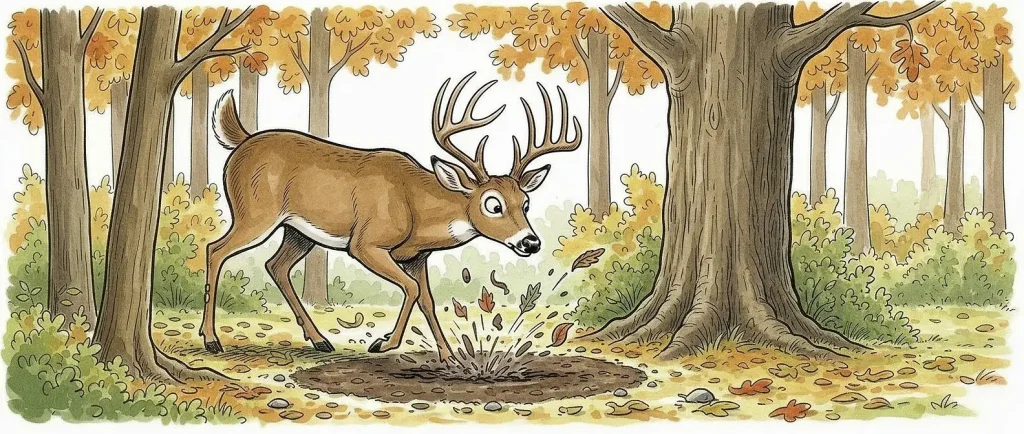
How I Hunt Whitetail Deer Scrapes
There’s nothing like stumbling onto a fresh scrape in the woods to get your heart going. Pawed-up dirt, a low-hanging branch, maybe a big track nearby — your mind starts racing: “That buck’s gotta be close.” I’ve fallen for that excitement more times than I can count.
But here’s the thing: Not every scrape is worth staking your hunt on. Sure, a scrape tells you deer are hanging around, but it doesn’t mean a mature buck visits during daylight. Plenty of bucks check scrapes after dark, and those savvy old ones usually swing downwind to scent-check, avoiding the open altogether.
Still, scrapes aren’t worthless. If you know what to look for, they’re valuable clues. They’ll help you figure out where bucks travel, where to set your cameras, and sometimes — just sometimes — where to get a crack at a good buck, especially as the rut ramps up.
Here’s the no-nonsense approach I use to hunt whitetail scrapes without burning up sits for nothing.
Most of what I have learned from hunting whitetail deer scrapes I’ve learned from Jeff Sturgis over at Whitetail Habitat Solutions. Thanks Jeff! Jeff has an awesome Youtube Channel as well.
1. The Problem: Most Hunters Hunt the Scrape Instead of the Buck
The most common slip-up? Guys pick every scrape as a stand site. A scrape just means deer have been there. It doesn’t tell you which deer, what time, or if a mature buck feels safe coming by when the sun’s up.
That big scrape on the field edge looks promising — but if it’s far from bedding cover, odds are, you’re just sitting there for midnight action. Open-woods scrapes aren’t slam dunks either, especially if you’ve got no terrain break, thick cover, or solid entry and exit routes.
So, when I find a scrape, I run through a quick checklist:
- Is it fresh?
- Is the licking branch chewed up?
- Is it close to bedding cover?
- Any rubs, tracks, or other scrapes nearby?
- Can I hunt it with a good wind?
- Can I get in and out clean?
- Is there a downwind trail bucks might use to scent-check?
That last one’s huge. Mature bucks are ghosts — they’ll often cruise past, checking scent from downwind instead of walking right in.
I don’t hunt scrapes for the sake of dirt. I hunt the deer’s route and habits.
2. The Opportunity: What Good Scrapes Can Tell You
If you pay attention, good scrapes reveal how deer move. The best ones aren’t random; they tie into a bigger system — travel corridors, bedding lines, funnels, field edges, staging spots, you name it.
There are really three types I focus on:
Primary Scrapes
These keep getting hammered. You’ll see a licked-over branch, fresh dirt, new tracks, even several trails feeding in. These deserve a hard look.
Community Scrapes
A bunch of deer use these, not just one buck. Does, younger bucks — they all visit the licking branch. Great spot for a camera, since you’re taking inventory of what’s around.
Mock Scrapes
Scrapes I make to steer movement. Do I think they’re magic? No. But if I’ve already got a good spot — say, by a funnel or travel route — a mock scrape can pause a buck in range. That little change can turn a so-so setup into a killer spot.
Honestly, the “scrape opportunity” isn’t just sitting over dirt; it’s using what you see to dial in on deer movement.
3. The Solution: How I Hunt Whitetail Deer Scrapes
Find Scrapes Where They Matter
A giant scrape in the wrong spot is worthless. I’d rather find a small scrape in the right place. That means areas where deer are already traveling, like:
- Bedding edges
- Trail intersections
- Inside field corners
- Ridge or creek crossings
- Staging areas
- Terrain funnels
- Edges of thick cover
- Downwind sides of doe bedding
When I spot clusters of fresh scrapes near security cover, I slow down. That cluster’s way more interesting than a lonely scrape on an open edge.
Look at the Branch, Not Just the Dirt
The licking branch tells you more than bare ground ever will. Bucks rub glands and leave scent everywhere — it’s the main communication hub. I look for chewed tips, broken twigs, fresh dirt, wet or dark soil, tracks, even deer hair stuck to the branch. If it looks worn and dirty, you’ve got action. Old dirt and untouched branch? Keep moving.
Camera Setups
Scrapes are gold for trail cameras, especially the main or mock ones. Cameras help you figure out which bucks are in the area — and if they actually move in daylight.
Resist the urge to over-check them, though. Leave too much scent around, and those old bucks vanish. I like far-sided cameras or cellular models when I can use them, just to keep my impact low.
Most of all, pay attention to timing — a buck showing at 2 a.m. is “close,” but not killable. One in shooting light? That’s when you dig in.
Hunt Off the Scrape (Sometimes)
Too many hunters sit right on top of the dirt and watch the scrape. Meanwhile, the buck swings downwind, scents the scene, and disappears. I like to set up off the scrape, watching likely approach trails, usually 30 to 60 yards downwind, depending on cover and wind.
The goal isn’t to stare at the scrape itself — it’s to sit where a mature buck will actually walk.
Best Times for Scrapes
Scrapes might show up anytime, but I really focus on them in the pre-rut — mid-October through the first week or so of November most years. Bucks get moving, checking sign, setting the pecking order. Once the true rut heats up, bucks switch to chasing does more than hitting scrapes.
During that pre-rut window, a fresh scrape near cover, when a cold front pushes through or the cameras show daylight activity, is when I get excited.
Making (and Using) Mock Scrapes
Mock scrapes work best along routes deer already use — don’t try to force them in dead spots. I’ll make one near stand sites, bedding edges, staging areas, wherever a buck might pause in shooting range. If there’s no good branch, I’ll zip-tie one at chest height.
It doesn’t need to be pretty — a boot scuff in the dirt, hang a branch, and leave it. I treat them as a bonus, not a replacement for actual sign or scouting.
What Not to Do
- Don’t hunt every scrape. Only focus on fresh, active ones near cover or movement.
- Don’t ignore the wind. You blow your scent into cover or a likely buck route, and you’re done.
- Don’t sit right on the scrape if bucks are skirting it downwind.
- Don’t check cameras every day and pollute the area.
- Don’t fixate on field edges — most big bucks hit those after dark. Get close to cover.
Key Takeaways
- Use scrapes as clues, not as a promise.
- That licking branch is gold — focus there.
- Clusters near cover matter.
- Cameras confirm patterns, but don’t overdo it.
- Hunt the downwind side.
- Get closer to bedding for daylight movement.
- Mock scrapes? Use them right.
- Pre-rut is prime time.
- Don’t push too hard. Let your access and the wind decide if a spot’s right.
FAQ About Hunting Scrapes
Final Thoughts
Hunting Whitetail Deer Scrapes isn’t about sitting over every pile of pawed earth you stumble across. That’s a good way to burn out your best spots fast.
Read the whole picture — wind, cover, bedding, access routes, and especially how deer use the area. Use your trail cameras carefully, pay attention to the licking branch, and only hunt a scrape when the odds are stacked in your favor.
If you want to actually kill a buck — don’t just hunt the dirt. Hunt the story it’s telling you about the deer. That’s the difference that fills a tag.