
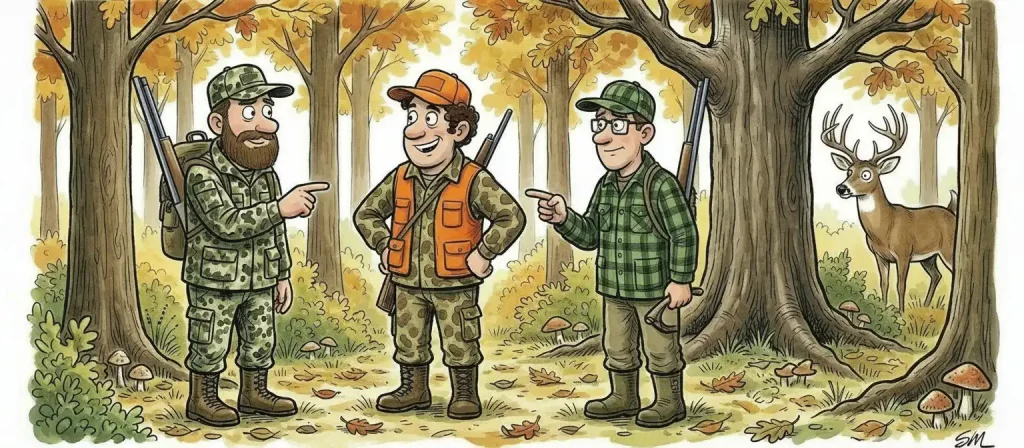
Deer Hunting Camouflage and How to Choose the Right Pattern
Choosing camouflage feels like it should be easy. You go into a sporting goods store, find a pattern with lifelike leaves and tree bark, and you’re all set, right? Honestly, it’s not that straightforward.
I can pick out a camouflage pattern that looks almost invisible indoors, but once I step into the field, it might stand out as too dark, too bright, or just plain wrong. A pattern that fits in perfectly during September can suddenly make me stick out when November rolls around and the leaves are gone.
Over time, I’ve realized that success doesn’t come from wearing the flashiest pattern. The real trick is to match your clothing to where you’ll hunt, the time of season, how you hunt, and even how deer tend to behave. The best deer hunting camo breaks up the human shape without making you uncomfortable or noisy. It’s there to help, but it won’t do your woodsmanship for you.
Understanding What Whitetail Deer Notice
You’ve got to know how deer see the world before you pick out your camo. Whitetail deer don’t observe their surroundings like people do. Studies show they can’t pick out red and green very well, but blues stand out to them. Their vision is also a bit blurry compared to ours. So, the photorealistic leaves and bark that wow people may not matter much to a deer.
They’re sharp at catching movement, hard outlines, and unnatural shapes. That means the big picture of your camo pattern matters more than tiny details. When I look at a pattern, I focus on three things:
- Large-scale breakup: Big light and dark shapes break up my outline.
- Fine-scale texture: Smaller marks add depth up close so I don’t look like a solid blob.
- Environmental color: The main colors have to blend in with the area where I hunt.
Some camo with lots of detail turns you into a dark, human-looking blob from a distance. Patterns with bigger, bolder shapes may not look super realistic up close, but they’re better at disguising your arms, shoulders, and torso. That’s why so many newer camo patterns look abstract—they use blocks, shadows, and lines instead of perfect leaves. Field & Stream points out that as people learn more about deer vision, companies are moving away from super-detailed “sticks and leaves” designs.
Even though I like the old-school patterns, those broad areas of brown, tan, black, and green still work when their colors and contrast fit the woods. The deer couldn’t care less about the age of the pattern—they care about what stands out as odd.
Match Your Hunting Camouflage to the Season and Terrain
The coolest camo in the catalog doesn’t always work where I hunt. I start by looking at my surroundings, not just the pattern on the tag.
Early Season
When archery season opens, the woods are often still green and thick. Lighter greens, warm browns, and some contrast match these conditions. I also want clothes that are lightweight and breathe well. If I’m sweating and fidgeting, it doesn’t matter how good the pattern is.
SKRE recommends camo with green tones, breathable fabrics, and quiet material for early hunts where leaves and shadows are still everywhere.
Midseason and the Rut
By mid-October, things change. Leaves turn tan, brown, and gray, and more tree trunks show through. This is where I want a versatile camo—earth tones that balance with bark, leaves, brush, and the forest floor. A good pattern mixes neutral colors with both vertical and irregular shapes and handles moving between fields, creeks, and woods.
Late Season
In late season, the background is completely different—bare trees, gray skies, maybe snow or frosted weeds. Greens stick out. Gray, tan, brown, and off-white do the job, especially with bold contrasts. Vertical patterns work well from a tree stand, matching up with trunks and shadows. I want the jacket to stay quiet, too—cold weather can make material stiff and noisy, which ruins everything if a deer’s close.
So, in late season, I look for camo that breaks up my outline, fits the colors around me, and stays warm and quiet.
Choose Camouflage for Your Hunting Method
How and where I hunt changes what I need from my camo.
Tree-Stand Hunting
In a tree stand, there’s lots of trunk, branches, open space, and shifting light. I pick camo with large and vertical patterns so I don’t stand out as one big shape. I focus on the parts that move—head, face, hands, shoulders, arms. Covering those makes more sense than buying camo for things that rarely move. Patterns for tree stands need vertical breakup and enough contrast for deer looking up at you.
Ground Hunting
On the ground, I’m right at a deer’s level. My backdrop is weeds, leaves, logs, and brush instead of trunks and sky. I pick patterns with horizontal and irregular shapes that look right in that setting. Natural cover is a big help too—I’d rather lean against a big tree or brush pile than sit out in the open, hoping my camo does all the work.
Mobile Hunting
If I’m on the move—still-hunting, scouting, or shifting setups—I want gear that’s quiet, breathable, and tough. I stay away from loose straps, clanking buckles, or anything else that gives me away as I go. No pattern can save you if you move carelessly, so I’m always slow and use cover along the way.
Common Mistakes to Avoid
One mistake is buying camo by store lights instead of checking it in the woods. I like to snap a picture of a pattern against real cover from different distances. Another is picking something too dark—a pattern can look detailed up close, but at 60 yards, just blend into a dark blob.
Don’t forget about skin, either. A bare face or hand shines more than your clothing. Washing with detergents with optical brighteners can make you more visible to deer, too. I wash with scent-free, brightener-free detergent and store my gear away from household smells.
But I never let camo trick me into feeling invisible. Bad wind, moving too much, noisy gear, or a wide-open setup will ruin any camo.
Practical Tips and Takeaways
Here’s my basic test for picking camo: Take a picture of your camo in the hunting spot. Look at it from 20, 40, and 60 yards. Squint or blur the photo. If your outline’s still obvious, rethink the pattern. Try it out in sun, shade, and low light. Move around—see if the fabric’s quiet when you draw or move.
You really don’t need a new set for every week of the season. One good core pattern with the right base layers, outerwear, gloves, and hats will cover most days. Function always comes first. Warm, dry, silent, and comfortable beats “perfect” camo that makes you squirm.
FAQ About Hunting Camouflage
Final Thoughts
Picking hunting camo isn’t about chasing the latest pattern each year. It’s about paying attention to the woods and figuring out what really works where you hunt. I look at the terrain, seasonal colors, how I hunt, how loud the fabric is, and how comfortable it feels. But at the end of the day, camo’s only one piece of the puzzle.
You also need patience, good spots, a nose for the wind, and slow, intentional moves. Put those together, and camo becomes more than just clothing—it becomes another smart tool in your bag for hunting whitetails.