
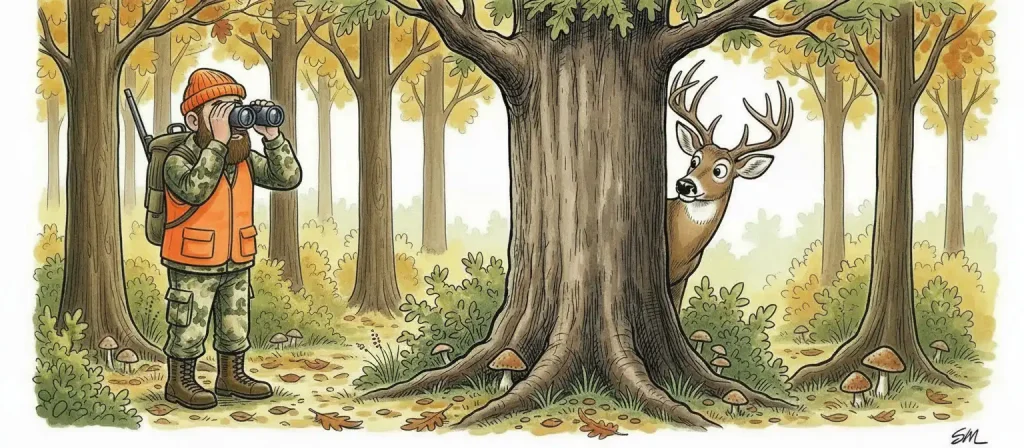
Deer Hunting Optics: Why Quality Glass Makes You a More Effective Whitetail Hunter
Whitetails rarely stick around long enough for a leisurely look. In the woods, sometimes all I catch is a twitch of an ear or the quick flash of antler. Out in the field, there’s still plenty to figure out: Is it the right deer? How far away is it? Which way is it moving? Darkness creeps in before you know it.
Cheap optics? They’re a pain. They waste my time, strain my eyes, and blur important details. And just cranking up magnification doesn’t fix the problem. I want sharpness, a wide view, good low-light pickup—not to mention ruggedness and speed.
Good glass gives me space. I can scout from farther back, ID deer without spooking them, and size up distance for an ethical shot. Every optic I carry plays a role. Here’s how I make them work together.
Fit Your Optics to the Habitat
First, think about where and how you hunt. Heavy timber? I lean toward a wide view, quick target finding, simple reticles, and low magnification. Too much power just turns a deer into a weird blob of hair. I leave my scope at its lowest setting and only crank it up if the shot demands it.
If I’m hunting farmland or open fields, I might want extra magnification. Sure, a fancy reticle helps with precision—but only if I’ve practiced with it. I won’t mess with turret adjustments or holdovers unless I’ve actually proven them on the range.
Don’t get distracted by objective lens size alone when thinking about low-light performance. Lens quality, coatings, exit pupil, build, and where your eye sits all matter more. I’d rather have balanced, dependable glass than a monster optic that hangs up in every branch.
Always choose what suits the most likely shot—not the daydreams about the one-in-a-million buck.
Scout at a Distance: Binoculars and Spotting Scopes for Deer Hunting
Decent glass lets me learn a lot without leaving my scent everywhere. That’s one of the best whitetail tips I know. Before I step out or approach a field, I glass from a hidden, downwind spot.
Binoculars are my workhorse. An 8x is wider and steadier, while 10x brings distant details. I dial them in before the season with some adjustments for my eyes.
Spotting scopes help for picking out antler points or tracing bucks across big fields. But if the woods are tight, they’re too heavy and don’t really add much.
I scan edges, shadows, openings, and terrain changes in sections. I revisit hot spots because a still deer can vanish into thin air. If I can, I stay until last light.
Optics play nice with trail cameras. A camera confirms who shows up, but glassing tells me where they come and go—without me intruding on their core hangout.
Range Finder: Map It Out Early
A range finder takes the guesswork out—if I use it before I get amped up. I range visible trails, tree lines, field corners, and key trees from my setup. Makes a mental map: close trail, 22 yards; oak, 31; deep end, 184.e things change.
Bowhunters know a tiny mistake means a big miss. Firearm hunters get fooled by tricky terrain, too. Sometimes I’ll range a deer, sometimes just his landmark—I’m always careful not to expose myself with too much movement; if it’s risky, I stick to my mental map.
When scouting, I range a buck and some nearby feature to remember his entry point later—helps me avoid wandering all over.
And I always use binoculars to ID an animal, not the riflescope. My rifle doesn’t go up until I see the deer, check the background, and decide the shot’s right.
Common Deer Optic Slip-Ups
- Grabbing more magnification instead of useful glass: More power usually means less field of view, shakier picture, and slower target finding.
- Trying to glass barehanded: A tree or tripod shows details your shaky hands just can’t.
- Ignoring weather: Waterproof seals, lens covers, and a clean lens cloth are musts.
- Leaving gear in a hot vehicle: Heat ruins seals and materials fast.
- Skipping practice: Train with every dial and at real distances before game day.
- Mistaking visibility for legality: Glass never stretches legal shooting hours or justifies unsafe shots.
Practical Tips & Takeaways
Before the season starts, I clean lenses right, check mounts, put in fresh batteries, confirm my zero, and bring a backup battery. I practice using everything with gloves on, since buttons and focus wheels feel different when it’s cold.
Binoculars stay in a chest harness. I brush off grit before wiping, keep my scope dialed down in thick cover, and range my landmarks ahead of time. The best optics aren’t always pricey—they’re the ones that actually work and keep things clear where I hunt.
FAQ About Optics for Deer Hunting
Final Thoughts
Good deer hunting optics give me answers without pushing me too close. Binoculars find and ID deer; spotting scopes study them from afar; range finders take out the guesswork. The riflescope helps finish it with a confident, safe shot.
Build your optic setup around habitat, real distances, and your own hunting style. Test everything in the field, learn the controls until they’re second nature. Great glass can’t replace old-fashioned woodsmanship, but together, they let me see more, spook less, and make the right decisions.