
Scent Control for Deer Hunting: 7 Practical Steps
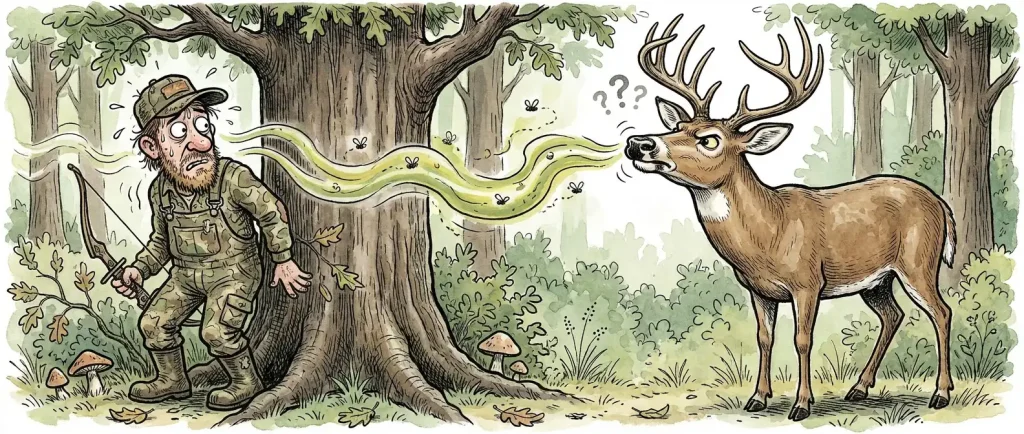
Nothing ruins a carefully planned whitetail hunt faster than a deer stepping into your scent stream. You can scout the right trail, wait for the right daylight movement, and settle into a perfect setup—only to hear a sharp snort from downwind.
I have learned that scent control for deer hunting is not one miracle spray or special garment. It is a chain of small decisions that begins before I leave home and continues until I climb down.
The good thing is, I don’t have to completely get rid of my smell. That’s just not possible. What I want to do is reduce how much I smell like a human, keep that smell away from areas where deer are likely to be, and not leave my scent all over the place when I’m approaching.
If I can do all those things, I’ll feel more confident when I’m hunting and I’ll be less likely to scare off a big buck.
If you remember any one thing about hunting whitetail deer then remember to hunt into the wind or at least into a crosswind.
Why Wind Matters Most for Whitetail Scent Control
When it comes to hunting whitetails, I trust the wind more than any laundry detergent. The National Deer Association points out that yes, it’s smart to limit your scent in the woods, but nothing beats hunting with the wind on your side. You can follow every scent-control routine in the book, but if the wind’s blowing your scent right into a bedding area or feeding spot, you’ll blow your chances too.
That’s why I treat scent-control sprays and soaps as backups, not my main plan. I saw this echoed in a recent MeatEater article: when things get iffy, trust the wind. Weather forecasts help, but real wind on the ground changes all the time—hills, woods, sun, and shifting temperatures spin the breeze every which way once you’re out there.
7 Scent Control Tips for Deer Hunting
1. Every Stand Needs a Safe Wind
Before I settle into a stand, I look at the wind and decide which directions will keep my scent clear of where I expect deer to come from. I don’t stop there; I also check my parking spot, how I’ll get in and out, and what the wind does along those routes. If the wind isn’t right and blows toward a bedding area or across a hot trail, I leave and pick another stand.
2. Clean Without the Scents
Before I hunt, I use unscented soap and deodorant, and I wash my hunting clothes alone with unscented detergent. I steer clear of anything that’ll leave strong smells—dryer sheets, air fresheners, cooking odors, gas, even the dog. That won’t scrub away every trace of scent, but it cuts out the stuff you don’t need to bring with you.
3. Store and Change Outside
When my gear’s clean and dry, it goes straight into a sealed tote or bag that locks out smells. I don’t wear it around the house and usually change into it at the hunting spot. Boots, gloves, hats, harnesses, packs—wash and store them the same way. They soak up scent easily, but people forget about them all the time.
4. Sweat Less On the Way In
Sweat undoes all your prep. I slow down on my walk in, give myself extra time, and carry my warm gear instead of wearing it early. Once I’m at the stand and cooled off, then I add layers. This trick’s especially useful early in the season or anytime you’ve got a long or rough walk.
5. Keep Boots and Routes Clean
I try not to rub up against brush or walk right on the trail I’m hunting. I avoid bedding cover, scrapes, and don’t walk on the downwind side of food sources if I can help it. Rubber boots help hold less odor, but honestly, your path through the woods matters way more than the boots themselves.
6. Clean the Stuff You Touch
A fresh jacket means nothing if the things you handle—your release, binoculars, phone, even your seat—still smell like the truck. I keep food, smokes, scented wipes, and gas away from my gear, and I clean the stuff I touch most. I don’t mess with branches or brush unless I absolutely have to clear a shot.
7. Watch the Wind and Thermals the Whole Time
The wind in the parking lot doesn’t always match what’s at your stand. I carry a wind checker or float some milkweed to see exactly where my scent goes. In the morning, thermals pull scent up as the sun warms the earth; by evening, dropping temps can drag air downhill. If the wind suddenly blows into a risky spot—and stays there—I move or slip out quietly.
Quick Pre-Hunt Scent Control Checklist
– Double-check the wind for every part of your plan—stand, entry, and where deer might come in.
– Shower and use unscented products before heading out.
– Haul clean clothes and gear in airtight containers.
– Change outside and carry layers instead of sweating in.
– Steer clear of deer trails, thick beds, and any unnecessary brush.
– Keep watching the wind as the day heats up, cools down, or anytime things change.
Common Scent Control Mistakes
When it comes to hunting, a lot of people make the mistake of relying too heavily on scent-control sprays, thinking that’s all they need to worry about when it comes to the wind. But that’s not the only thing that can give you away.
Others mess up by wearing their hunting gear in the truck, which is probably filled with all sorts of smells, and then rushing to their stand, getting all sweaty in the process.
And let’s not forget about contaminated accessories – that’s another way to leave your scent behind.
Some hunters also only check the wind once, instead of keeping an eye on it all day.
Now, cover scents and odor-control sprays can be helpful if you’re already being careful about your routine, but they’re not a substitute for choosing a smart stand location or making sure your path to the spot is clean.
You need to be mindful of the wind and your scent all day long if you want to be successful.
FAQ About Scent Control for Deer Hunting
Final Thoughts
For successful whitetail hunting, having good scent control isn’t about being flawless every time, it’s more about following a consistent routine. To start, I pick a wind direction that keeps my scent away from the areas where I think deer will be moving. Then, I reduce odors on my body, clothes, boots, and all my equipment.
When I’m hiking to my spot, I try to avoid crossing any important deer trails, I attempt to minimize sweating as much as possible, and I constantly check the wind direction from the time I set up until I leave. If you make this routine a habit for every hunt, scent control will no longer be the weak point between all your scouting efforts and actually getting a shot. By doing this, you can increase your chances of a successful hunt.
It’s all about being mindful of the wind and your scent, and taking the necessary steps to control it. This way, you can focus on your hunting skills and enjoy the experience, rather than worrying about scaring off deer with your scent.